BRNSFT's Productivity Blog
Tags
- AI
- AI-assisted focus
- Agents
- Audio
- Change
- Cognitive Load
- Cognitive Science
- Context Switching
- Decent Work
- Deep Work
- Doorway effect
- Economic Impact
- Employee Engagement
- Employee Well-being
- Generative AI
- Habits
- Ikuna
- LLM
- LLM Agents
- Mental-Models
- Mindset
- Neuroscience
- Pomodoro
- Positive
- Productivity
- Routine
- Routines
- Save Workspace
- Well-Being
- Well-being
- Workplace Dignity
- attention
- attention management
- attentional residue
- burnout
- burnout prevention
- cognitive
- cognitive enhancement
- cognitiveload
- comfort zone
- concentration
- deep work
- digital nomad
- digital wellbeing
- efficiency
- environment
- ergonomics
- eventsegmentation
- focus
- home office
Latest Blogs

The Doorway Effect: Why Your Brain Wipes the Slate Every Time You Switch Apps
Every time you Command-Tab, your brain treats it as walking through a door. The literature on the doorway effect says that crossing an event boundary flushes some of the state you were holding a second earlier. On a modern Mac, you cross fifty of those boundaries a day. That's not a productivity metaphor. It's a specific finding about how the brain segments time.
Ikuna in 2026: What Shipped, What's Coming, and Where We're Aiming
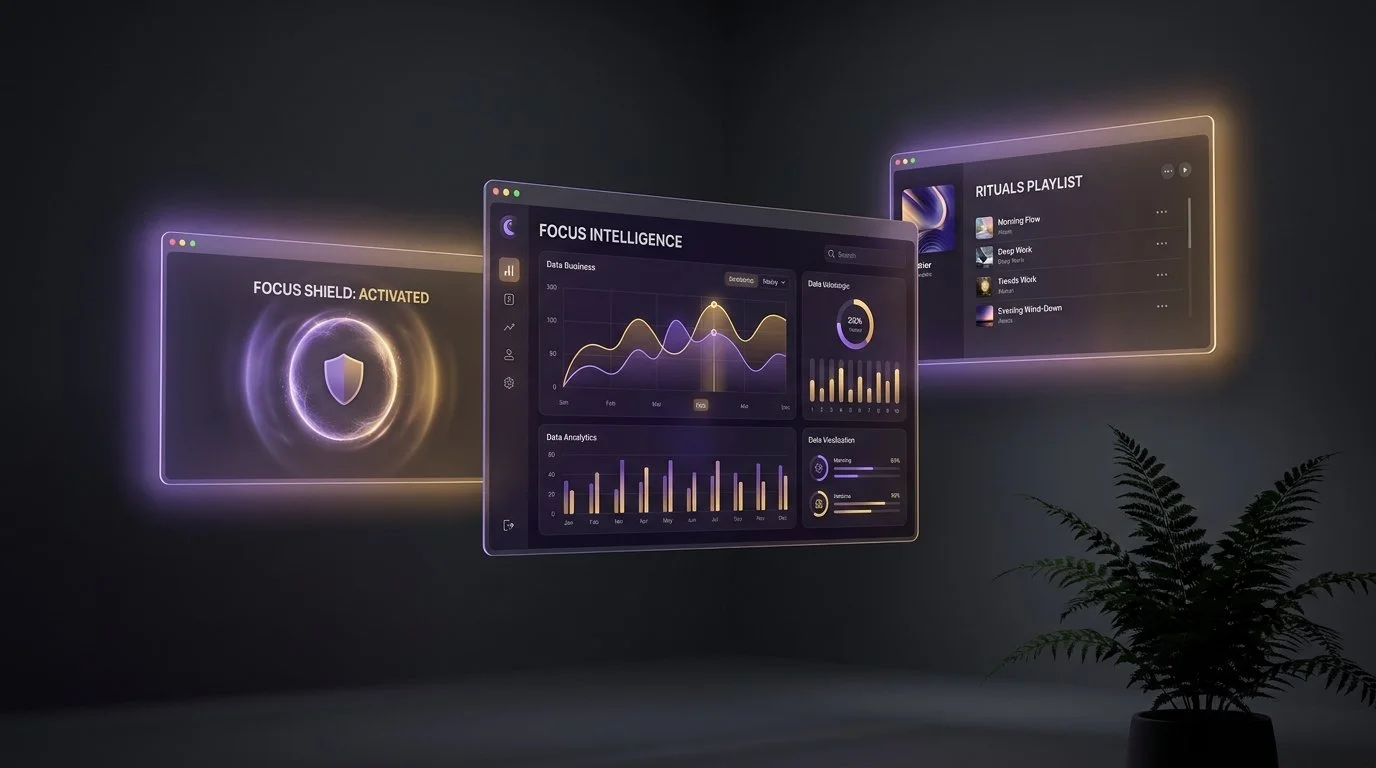
I ramped production back up after a long stretch of keeping the lights on but not much else. Seven months later, Ikuna is stable, the intelligence layer is in, and the product is finally what it was supposed to be from the start. Not a window manager with extras. A focus intelligence platform that happens to use save and restore as the mechanism.
This is the narrative changelog. Not a bullet list, not a press release. The honest version of what shipped, what we got wrong, what's coming, and where the company is actually aiming.
Why Ikuna Is More Than a Window Manager
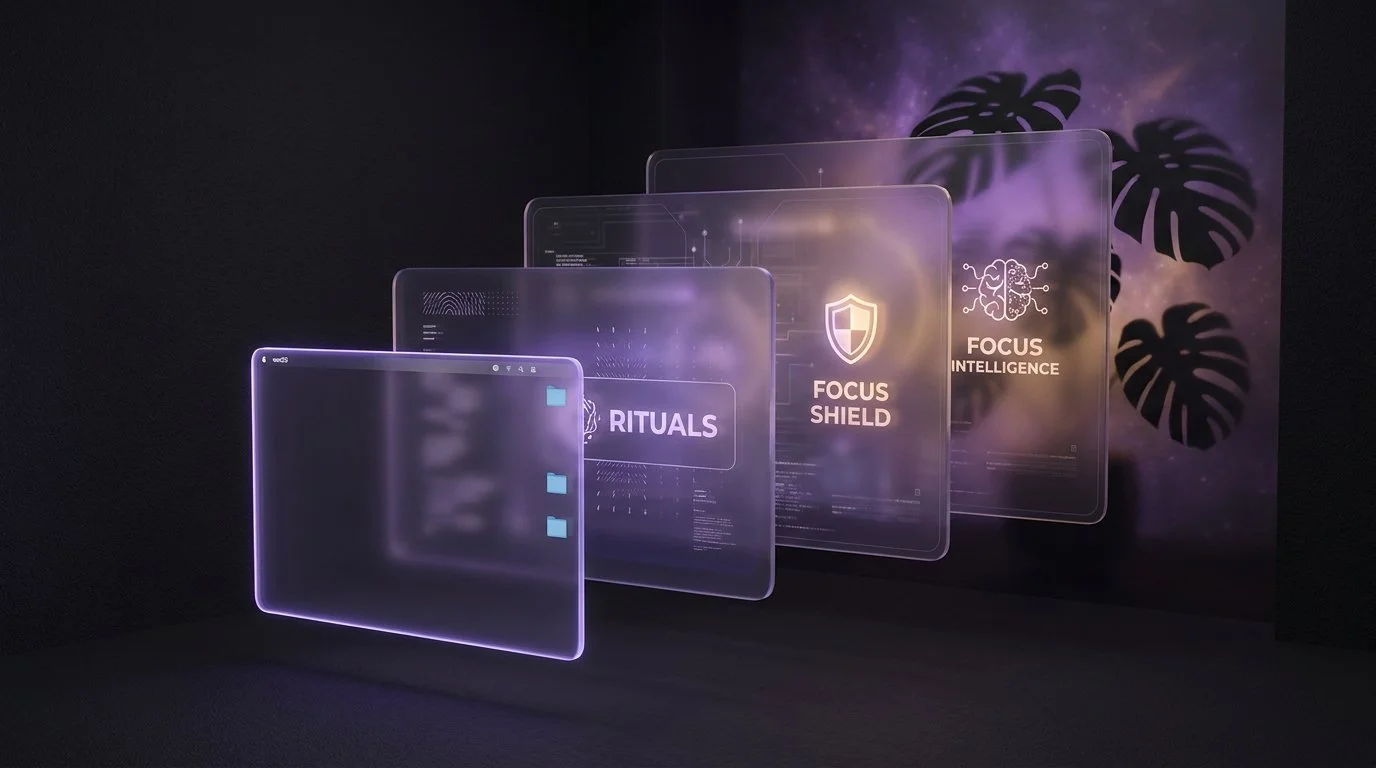
I get it. At first glance, Ikuna looks like a window manager.
That's not an accident. We put the snapping and the layout on the surface deliberately, because in 2020 that was the fastest way to explain what the app did in ten seconds. If you're evaluating productivity tools and you see windows snap into place, you understand the value proposition immediately. Rectangle does that. Magnet does that. Stage Manager does that. The category is legible, the benefit is instant, and you can decide whether you want it in about thirty seconds.

Why I Built Ikuna: The Office Stack We Lost When We Went Remote
When I went fully remote, my productivity didn't dip. It collapsed.
It wasn't dramatic on day one. I had a laptop, a kitchen table, a reasonable internet connection, and what I believed was a decade of self-discipline. By month two, I was finishing the day with the same feeling you get after a long flight: I'd been on, technically, for nine hours and could not point to a single block of real work. Meetings ran into deep work, deep work ran into messages, messages ran into a half-written doc I'd already opened twice that morning. Each evening I'd close the laptop convinced I'd just had a bad day.

The Science Behind Ikuna: Six Papers That Shaped the Product
We knew remote work felt worse than office work, and we knew the productivity advice you get for that is mostly folk wisdom. Time blocking. Pomodoro. Morning routines. None of it was wrong, exactly, but none of it explained why the problem existed in the first place. So we went looking for actual papers. Not productivity blogs citing papers. The papers themselves.

The Science Behind Visual Triggers and Focus: How Generative Art Keeps You in Flow
Visual environments affect focus more than most people realize. Research in cognitive neuroscience shows that low-complexity, evolving visual stimulation can sustain attention and reduce mind-wandering. Generative art, algorithmic visuals that change gradually over time, applies this principle to focus sessions. Ikuna Trigger uses evolving AI-generated art during Pomodoro sessions as a functional focus anchor, not decoration.

Why Your Pomodoro App Stops Working After a Week (And What to Do About It)
Most Pomodoro apps stop working within a week because they offer nothing beyond a countdown clock. Once the novelty of timing yourself wears off, you ignore the timer, skip breaks, and abandon the technique. This is timer fatigue, the pattern where a focus tool becomes invisible through repetition. The fix is not a better timer. It is an engagement layer that makes each focus session feel different from the last.
How to Stop Losing Your Browser Tabs When Switching Mac Projects
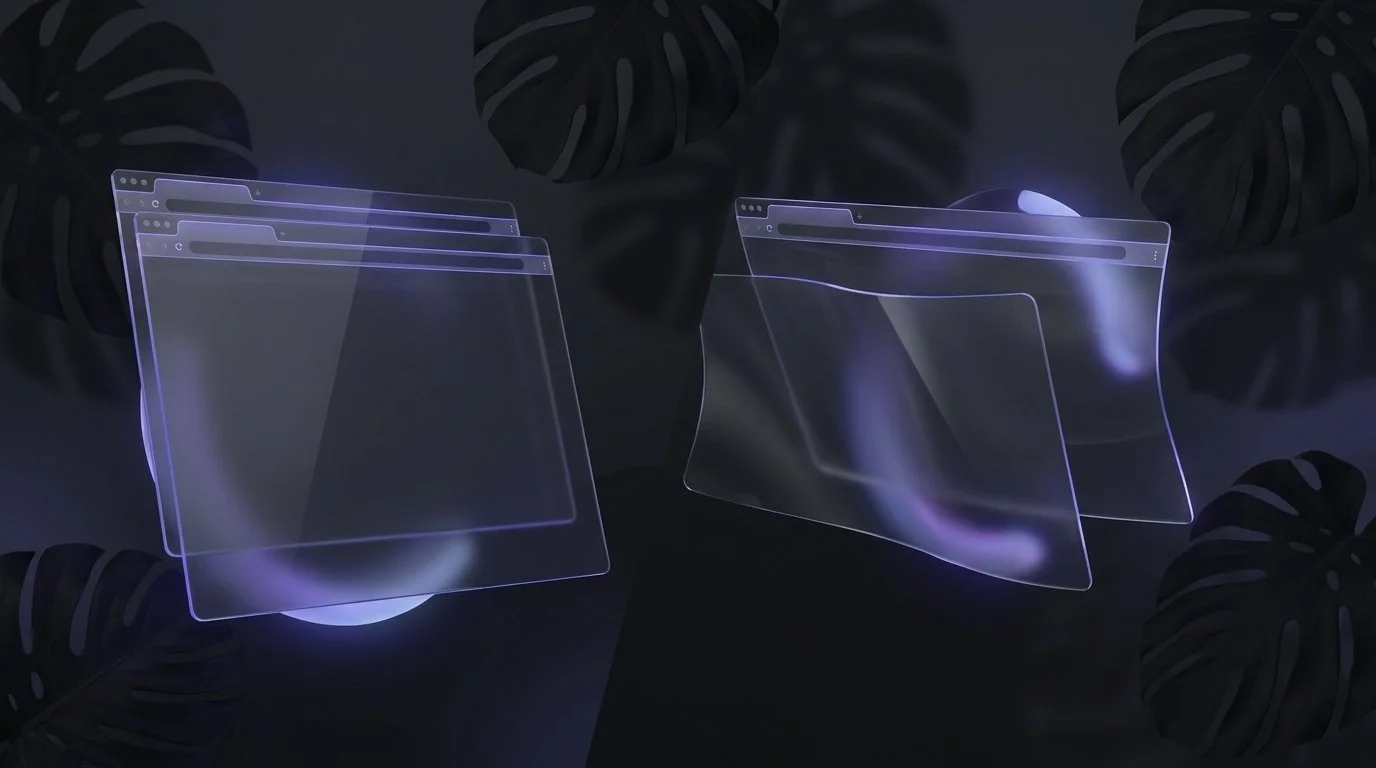
Every time you switch between projects on your Mac, your browser tabs disappear or get mixed up with other tabs.
You close Chrome to focus on a new client. When you come back, those 12 research tabs are gone, buried in history, or merged into a different session. You don’t just lose tabs. You lose context.
macOS was never designed to understand projects. It understands apps. It understands windows. But it does not understand that a set of tabs belongs to a specific piece of work.
Ikuna solves this at the system level. It saves your browser tabs as part of a named project context and restores them when you switch back.
No extensions. No bookmarking workflows. No reconstruction.