Ikuna in 2026: What Shipped, What's Coming, and Where We're Aiming

Part of the Ikuna series, a five-piece brand story:
What Is Ikuna · Why I Built It ·Updates in 2026· More Than a Window Manager · The Science Behind It
It's a good moment to write down where Ikuna actually is, because a lot changed in the last twelve months, and I'd rather you hear the timeline from me than reconstruct it from tweets.
The short version: from autumn 2025 I ramped production back up after a long stretch of keeping the lights on but not much else. Seven months later, Ikuna is stable, the intelligence layer is in, and the product is finally what it was supposed to be from the start. Not a window manager with extras. A focus intelligence platform that happens to use save and restore as the mechanism.
This is the narrative changelog. Not a bullet list, not a press release. The honest version of what shipped, what we got wrong, what's coming, and where the company is actually aiming.
What shipped in the last twelve months
Save & restore stabilised.
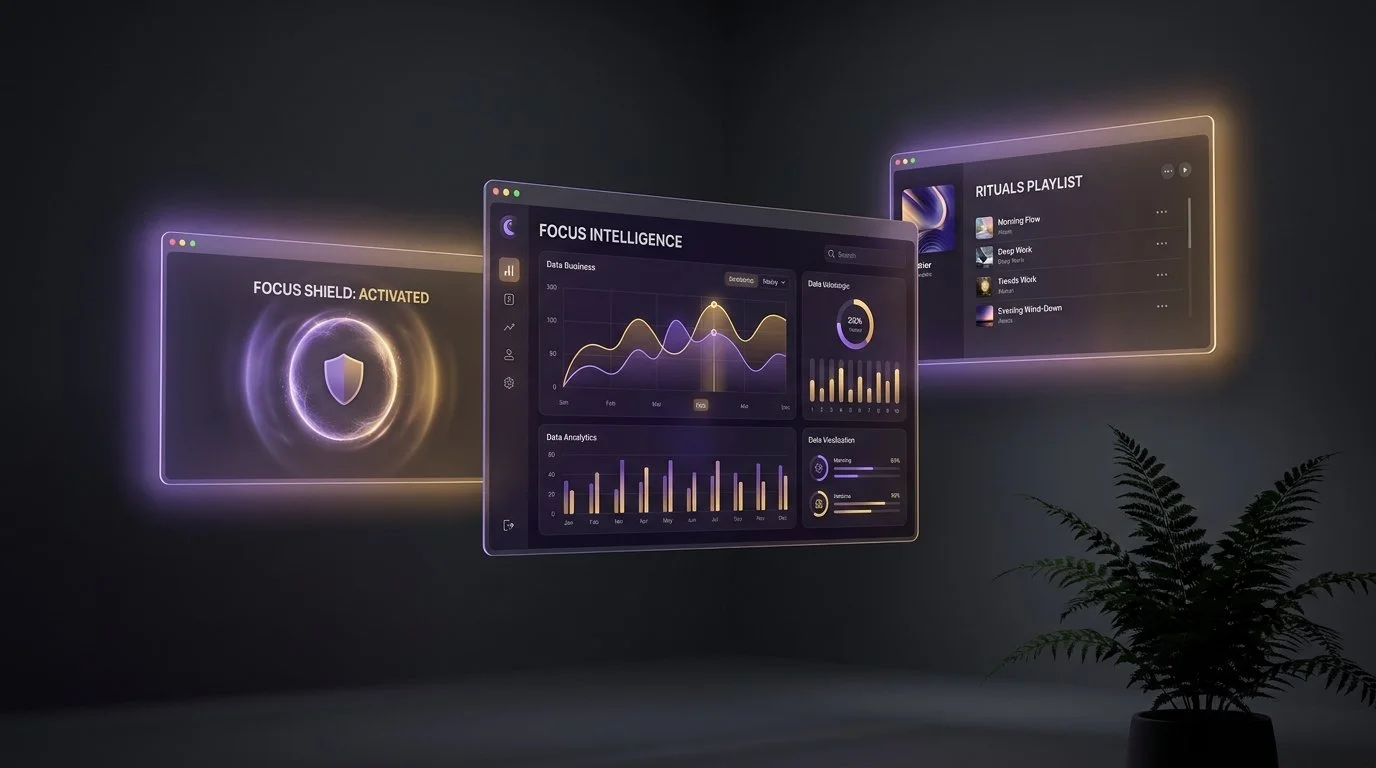
This was the foundation, and it needed to be rock-solid before anything else mattered. Contexts now rebuild in under three seconds on both Apple Silicon and Intel, on macOS 13 and up. Apps, browser tabs, window layouts, monitor arrangements, all of it. The speed isn't a feature for its own sake. It's what makes the boundary between contexts cheap enough that you actually use it. If switching took fifteen seconds, you'd avoid it. At three seconds, it becomes infrastructure.
Focus Intelligence dashboard.
This is the part that turned Ikuna from a workspace switcher into what it was supposed to be. The dashboard shows you the shape of your own attention: how long you stay in a context before switching, when your deep-work blocks actually happen, how often a context gets interrupted before it reaches twenty minutes. Most knowledge workers have never seen this data. I hadn't, until we built it for ourselves. The first time I looked at mine, I realised that what I'd been calling "a deep work morning" was, on average, six twelve-minute fragments. The dashboard does what the office used to do passively: it gives you an honest external view of your own behaviour. This is the intelligence layer. Save and restore is the mechanism. Focus intelligence is the product.
Focus Shield.
Per-context distraction blocking with a two-stage escalation: gentle nudge first, then full-screen block if you keep trying. This is Ikuna's own attention-guarding layer. It is not a macOS Focus Mode wrapper, because the API doesn't allow it. Focus Shield is built from the ground up to work with Ikuna contexts, and it knows which distractions belong to which mode. When you're in "Deep Writing," Slack is blocked. When you're in "Customer Calls," it isn't. The intelligence layer told us where people were losing focus. Focus Shield is the behavioural guard that closes the gap.
Rituals & Triggers.
Per-context wallpaper, opening video, and playlist. This was always the point. The research on ritual entry and environmental anchoring is unambiguous: repeated, multi-sensory sequences become reliable triggers for cognitive states. Athletes use this deliberately. Office workers used it accidentally, through the commute and the desk and the coffee machine. Remote work removed it. Rituals & Triggers put it back. My morning context plays a specific piece of music and shifts the wallpaper. Five seconds, every weekday. After about a week, the music alone started doing the work the commute used to do.
Device Link.
Multi-monitor layouts auto-rebuild when a display reconnects. This sounds small until you've spent three minutes dragging windows back to the right screen after unplugging your laptop. Device Link remembers which monitor each window belongs to, per context, and puts it back when the monitor reappears. It's the kind of infrastructure that's invisible when it works and maddening when it doesn't.
New home at ikuna.app.
We acquired the exact-match domain and shipped a Cloudflare-hosted conversion site alongside the brnsft.com free-plan landing. The two-surface architecture is deliberate: ikuna.app is where Pro checkout lives, where the brand authority sits, where the cognitive-science framing gets the space it needs. brnsft.com/ikuna is where the free plan lives, where top-of-funnel discovery happens, where the blog sits. The split isn't hidden. It's the truth. One brand, two surfaces, each doing a different job.
New positioning: Focus intelligence & context manager.
For a long time we presented as a workspace switcher because that was the easy sell in 2020. Window snapping felt like magic. The anchors underneath, the visual and audio triggers, the neuroscience layer, that was the real product, but it's a hard sell in the first ten seconds. So we put the magic on the surface and the science underneath. That worked to get people in the door, but it also meant that a lot of people thought Ikuna was a window manager with extras. It isn't. Save and restore is the mechanism. Focus intelligence is the product. The new positioning says that out loud.
What we got wrong
The workspace-switcher framing was misleading. Not wrong, exactly, but incomplete in a way that cost us. People came in expecting a better window manager, and when they hit the anchors, the rituals, the intelligence dashboard, some of them didn't know what to do with it. The product was doing more than the positioning promised, which sounds like a good problem until you realise it's actually a trust problem. If I tell you I'm selling a hammer and you open the box and find a drill, you don't think "bonus." You think "what else did they not tell me."
The analytics layer took longer than it should have. Focus Intelligence shipped in the last twelve months, but the data was always there. We could have surfaced it two years earlier. We didn't, because we were still thinking of Ikuna as a tool that saves and restores contexts, not as a platform that reveals how you actually focus. That delay cost us the clarity we needed to position the product correctly.
We underpriced early. The free plan is still free, and it should be. But the Pro tier was too cheap for too long, which sent a signal about the product's value that we're still unwinding. The current pricing, €9/month or €6/month yearly, is where it should have been from the start.
Ikuna Trigger for iPhone (Q3 2026).
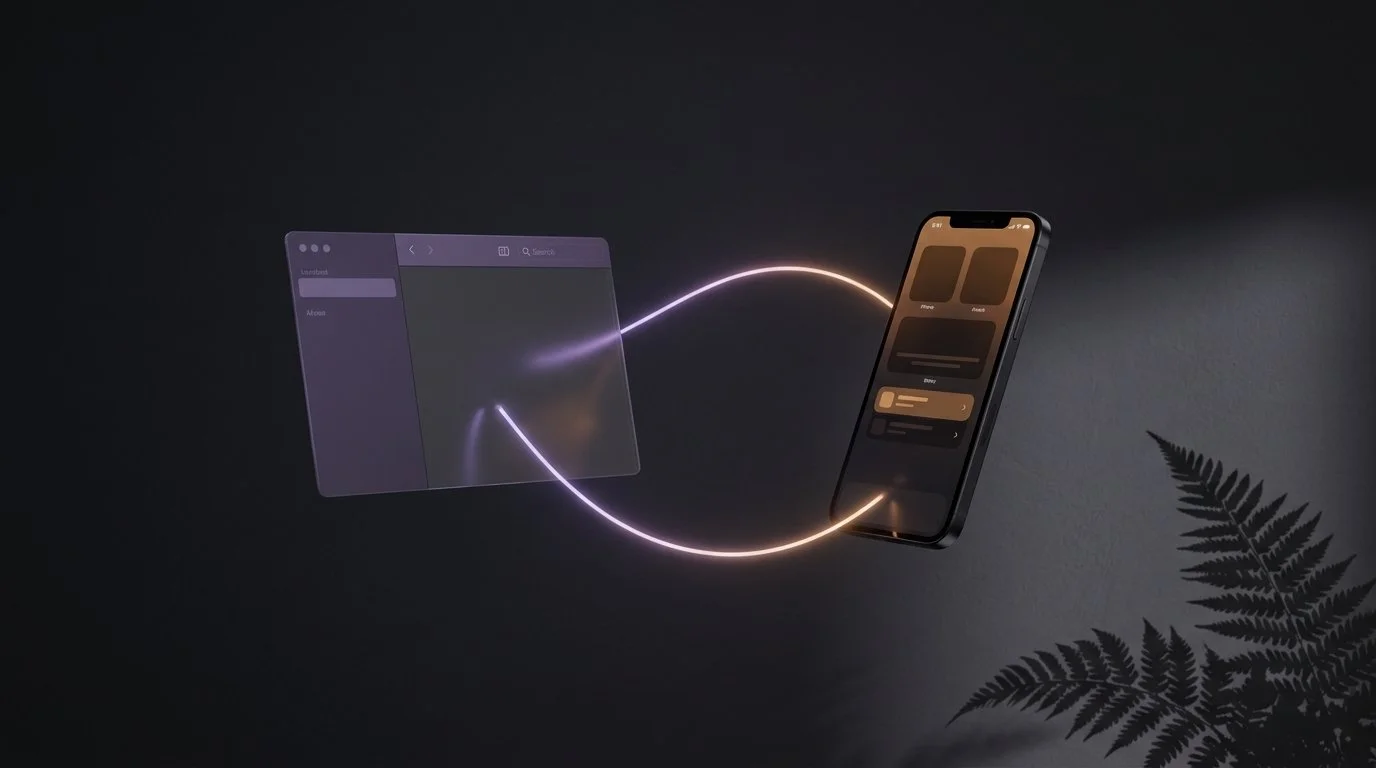
The mobile companion. This is not a separate subscription. It's included in the same Ikuna platform subscription, because the point is focus continuity beyond the desk. Ikuna Trigger carries contexts and rituals into mobile. When you leave your desk, the context you were in follows you. When you pick up your phone, the ritual fires, the environment shifts, and the focus state stays continuous. The beta is running now. Public release is Q3 2026.
Deeper Focus Intelligence.
Longitudinal patterns, week-over-week focus health, when your deep-work quality peaks by hour and day. The current dashboard shows you the shape of your attention in real time. The next layer shows you the trends over weeks and months, so you can see not just how you focused today, but how your focus is changing. This is the part of the intelligence layer that turns data into insight.
Small-scale research using Ikuna as the instrument.
Measuring the real-world impact of the visual and audio anchors against the literature they came from. Leroy's attention residue. Mark's context-switching cost. Radvansky's event segmentation. The research is clear that these mechanisms matter. What's less clear is how much they matter in the wild, with real knowledge workers, in real remote setups. Ikuna is the only tool I know of that can measure that, because it's the only tool that has both the anchors and the data layer. This is not a product feature. It's a research direction, and it's where I'm aiming next.
I'm being careful here not to promise specific features or shipping dates beyond Trigger. The roadmap is a direction, not a schedule. The direction is: keep building the intelligence layer, keep proving out the anchors, keep making the product smaller and more essential rather than bigger and more feature-rich.
What we're aiming at
The company's aim is not to become a bigger window manager. It's to become the smallest piece of infrastructure that puts the office's four cognitive mechanisms back inside a laptop.
Ritual entry. Environmental anchoring. Cognitive separation between modes. State persistence outside your head. Those are the four mechanisms the office was running on your behalf, and remote work removed them without telling you. Ikuna rebuilds them deliberately. The anchors underneath were always the product. The roadmap keeps aiming there.
The intelligence layer is what makes that aim legible. Without Focus Intelligence, Ikuna looks like a tool that saves and restores contexts. With it, Ikuna is a platform that reveals how you actually focus and gives you the infrastructure to focus better. That's the difference between a utility and a product. That's what we're building toward.
FAQ
Is Ikuna Trigger a separate subscription? No. Ikuna Trigger is included in the same Ikuna platform subscription. One subscription, two surfaces: Mac and iPhone. The point is focus continuity beyond the desk, and that only works if the mobile half isn't gated behind a second paywall.
When exactly does Ikuna Trigger ship? Q3-Q4 2026. The beta is running now. Public release is sometime between July and September. I'm not giving a specific date because I'd rather ship it right than ship it on time.
Why did you move to ikuna.app if brnsft.com still hosts the free plan? The two-surface architecture is deliberate. ikuna.app is where Pro checkout lives, where the brand authority sits, where the cognitive-science framing gets the space it needs. brnsft.com/ikuna is where the free plan lives, where top-of-funnel discovery happens, where the blog sits. One brand, two surfaces, each doing a different job. The split isn't hidden. It's the truth.
What happened to older Ikuna features/naming? The core features are all still there. What changed is the positioning and the naming. "Workspace switcher" became "context manager." "Snapping tool" became part of save and restore. The window manager is still in there, but it's not the product. The product is the intelligence layer and the anchors. If you're using an older version and the naming feels different, that's why. The product got clearer about what it actually is.
Ikuna is the focus intelligence and context manager for macOS. It rebuilds full project contexts, apps, tabs, windows, monitor layouts, in under three seconds, fires per-context rituals on entry, and shows you the shape of your own attention through Focus Intelligence. Free plan at brnsft.com/ikuna. Pro at ikuna.app.
