The Science Behind Ikuna: Six Papers That Shaped the Product

Part of the Ikuna series: a five-piece brand story: What Is Ikuna · Why I Built It · Updates in 2026 · More Than a Window Manager ·The Science Behind It
When Pasi and I started reading, we didn't know what we were looking for.
We knew remote work felt worse than office work, and we knew the productivity advice you get for that is mostly folk wisdom. Time blocking. Pomodoro. Morning routines. None of it was wrong, exactly, but none of it explained why the problem existed in the first place. So we went looking for actual papers. Not productivity blogs citing papers. The papers themselves.
What we found changed how we thought about the problem, and eventually, how we built Ikuna. This isn't a marketing science article. The mechanisms in the product — contexts as a primitive, Focus Shield escalation, the Rituals & Triggers system, the Focus Intelligence dashboard — came directly from these six researchers. Not loosely inspired by. Literally derived from.
This is what we read, what each finding actually says, and what we built because of it.
How to read this piece
For each of the six researchers below, I'll give you three things: a plain summary of the finding, what the research actually says beyond the famous headline number, and the specific Ikuna mechanism that came out of it. The point isn't to turn this into a lecture. The point is that when you use Ikuna and wonder why a feature works the way it does, the answer is usually in one of these papers.
Then I'll tell you what we're studying now, with Ikuna itself as the instrument, and why the science matters for a product decision at all.
The six papers
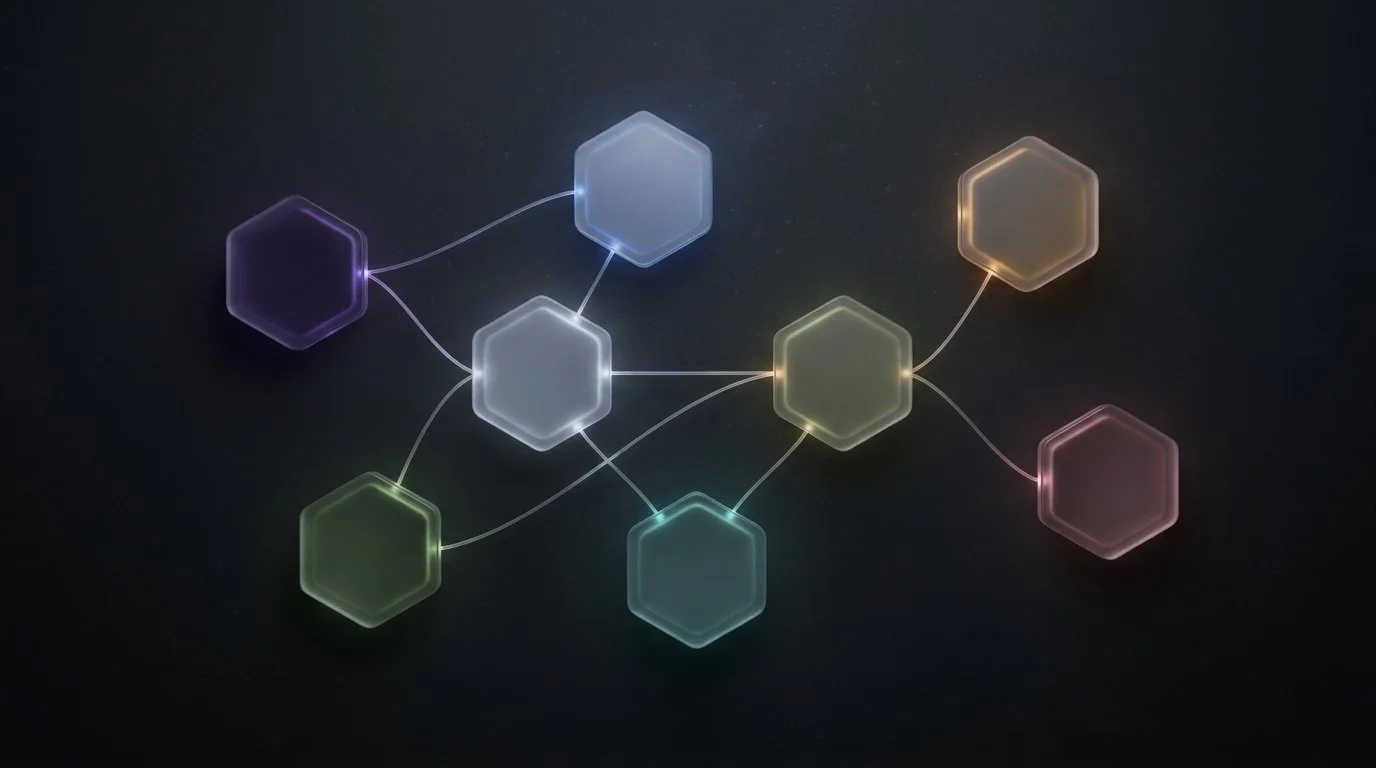
Gloria Mark, UC Irvine — Time to resume interrupted work
What she found: Gloria Mark's lab has been measuring knowledge work in real offices since the early 2000s. In a June 2006 Gallup interview, Gloria Mark reported that work interrupted and resumed on the same day was resumed, on average, after 23 minutes and 15 seconds, with about two intervening tasks. This measured time to task resumption, not a universal delay until full focus or 23 minutes of inactivity.
What it actually says: That finding does not establish a fixed cost for each app or project switch, or show that workspace software removes it. The more useful finding from Mark's work is that in physical offices, interruptions came in coherent bursts, with quiet stretches in between. Knowledge workers got blocks. Remote work, for many people, removed the blocks and left only the interruptions. Her more recent work shows that the problem isn't just the switch itself, it's the fragmentation pattern: short, frequent switches compound in ways that long, infrequent ones don't.
What we built because of it: The Focus Intelligence dashboard. It measures your actual context-switching behaviour — how long you stay in a context before switching, when your deep blocks happen, how often a context is interrupted before it reaches twenty minutes. Most knowledge workers have never seen their own attention data. The first time I looked at mine, I realised what I'd been calling "a deep work morning" was six twelve-minute fragments. The dashboard does what Mark's research does: it makes the invisible cost visible, so you can do something about it.
Jeffrey Zacks, Washington University — Event segmentation theory
What he found: Zacks's work on event segmentation theory, developed over two decades and summarised in his 2007 paper "Event Perception," shows that the brain doesn't experience continuous time as a stream. It chunks experience into discrete events, automatically, at boundaries. A boundary is any moment where prediction error spikes: you finish a task, you walk through a door, you switch tools. The brain uses those boundaries to flush working memory and reload the next event's context.
What it actually says: Event boundaries aren't arbitrary. They're where the brain naturally segments. When you force a switch in the middle of an event, before the boundary, you pay a cognitive cost because the brain hasn't finished the previous chunk. When you align your switches with natural boundaries, the cost drops. The implication is that the unit of focus isn't time, it's events. A context, in Zacks's terms, is the cognitive load associated with a single event.
What we built because of it: The contexts primitive itself. Ikuna's core unit isn't a window layout or a tab group. It's a named context that holds the full state of a discrete event: the apps, the browser tabs, the window positions, the monitor layout, the ritual that fires on entry. When you switch contexts in Ikuna, you're switching events, not just windows. That's why the switch includes a closure beat for the previous context and a ritual entry for the next one. We're trying to give the brain the boundary it's looking for, so the segmentation happens cleanly instead of leaving residue.
Gabriel Radvansky, Notre Dame — The doorway effect
What he found: Radvansky's 2011 study, "Walking through doorways causes forgetting," showed that passing through a doorway causes measurable forgetting of items associated with the previous room. Participants who walked through a doorway to retrieve an object were significantly more likely to forget what they were retrieving than participants who walked the same distance within a single room. The effect held in both physical and virtual environments.
What it actually says: The doorway isn't magic. It's a boundary. The brain treats doorways as event boundaries and uses them to flush working memory associated with the previous space. That's useful when you want to leave something behind. It's costly when you're trying to carry state across the boundary. The broader implication is that physical boundaries between contexts help the brain segment, but only if you're ready for the flush.
What we built because of it: The deliberate closure sequence when you switch contexts. When you leave a context in Ikuna, the system doesn't just hide the windows. It closes the previous context fully, with a small pause, before rebuilding the next one. That pause is doing Radvansky's work: it's giving the brain permission to flush. The alternative, Cmd-Tab between windows with no boundary, is the worst of both worlds. You get the cognitive cost of a switch without the benefit of a clean segmentation. The doorway effect tells you that boundaries are useful, but only if you actually walk through them.
Sophie Leroy, 2009 — Attention residue
What she found: Leroy's 2009 paper, "Why is it so hard to do my work?", introduced the concept of attention residue: the cognitive trace of a previous task that persists after you've moved on to a new one. Her experiments showed measurable performance drops on a new task when participants had been pulled away mid-flow from the previous one. Part of their mind was still attached to the unfinished task, dragging on the new one.
What it actually says: The headline finding is the residue itself. The more useful finding is from her follow-up work: brief, deliberate closure of the previous task, what she calls "ready-to-resume" planning, reduces the residue. Even a few seconds of intentional wrap-up, writing down where you were or what's next, measurably improves performance on the subsequent task. The mechanism isn't mysterious. You're offloading the "don't forget this" cognitive load onto an external note, so your working memory is free for the new task.
What we built because of it: Two things. First, the closure beat in a context switch, which I mentioned above. When you switch contexts in Ikuna, the system gives you a moment to close the previous one, not just visually but cognitively. Second, Focus Shield escalation. Focus Shield is Ikuna's per-context distraction blocking layer. It starts with a gentle nudge when you try to leave the context, escalates to a full-screen block if you persist, and logs the attempt. The escalation is deliberate. It's not trying to trap you. It's trying to make the switch decision conscious instead of automatic, so if you do switch, you've done the "ready-to-resume" work in your head. Leroy's research is unambiguous: the cost of a switch isn't the switch itself, it's the residue you carry. Focus Shield is trying to reduce the residue by making you pause.
Godden & Baddeley, 1975 — Context-dependent memory
What they found: Godden and Baddeley's 1975 study is one of the cleanest demonstrations of context-dependent memory we have. They had divers learn word lists either on land or underwater, then recall them in matching or mismatched environments. Recall was 40% better when the environment matched. The finding has been replicated across dozens of studies with different stimuli and environments. Memory isn't just stored in your head. It's stored in the interaction between your head and the environment you were in when you encoded it.
What it actually says: The 40% number is specific to their study and shouldn't be over-generalised, but the direction is robust. When the retrieval environment matches the encoding environment, recall improves. When it doesn't, recall suffers. The implication for knowledge work is brutal: if you're planning, writing, coding, and debugging all in the same browser, on the same laptop, at the same kitchen table, your brain has very little environmental signal to distinguish them. You're fighting context-dependent memory instead of using it.
What we built because of it: Rituals & Triggers. Each context in Ikuna can have its own wallpaper, opening video, and playlist that fire when you enter the context. The exact contents don't matter. What matters is that each context has a distinct, repeatable sensory signature. When you enter "Deep Writing," the screen changes, the music starts, and after about a week of repetition, those cues start doing the work a physical room used to do. They're anchoring the cognitive state to the environment. Godden and Baddeley tell you that memory is context-dependent. Rituals & Triggers are the mechanism that gives each context its own environment, digitally, so your brain has something to anchor to.
Roy Baumeister — Decision fatigue and ego depletion
What he found: Baumeister's work on decision fatigue and ego depletion, developed through the 1990s and 2000s, showed that cognitive control is a finite, depletable resource. The more decisions you make, the worse your subsequent decisions get. The more you exert self-control, the less you have available for the next task. The famous examples are judges granting parole more often early in the day, and shoppers making worse purchasing decisions after a long session.
What it actually says: Here's where I need to be honest. The specific effect sizes in Baumeister's early ego-depletion studies have been contested in the replication literature. Some replications found smaller effects, some found none. The debate is ongoing and technical. What's held up better is the broader direction: cognitive control is a limited resource, and you do not want to be spending it on decisions that could be automated. The parole study is robust. The general principle, that willpower is expensive and you should conserve it for things that matter, is sound even if the specific depletion mechanism is more complicated than the early papers suggested.
What we built because of it: The argument that Ikuna should exist at all. The office stack worked because the cues were external and effortless. You didn't decide to enter work mode. You walked through the door and the environment did it for you. Remote work moved that entire load back into your head. You're now spending willpower on the question of whether you're in work mode, which mode, and whether you're allowed to leave it. That's expensive, and it's exactly the kind of decision Baumeister's work says you should offload. Ikuna is infrastructure for offloading it. The contexts, the rituals, the Focus Shield, the automatic state restoration, all of it is trying to move the decision load back out of your head and into the environment, where it used to live.
What we're studying now
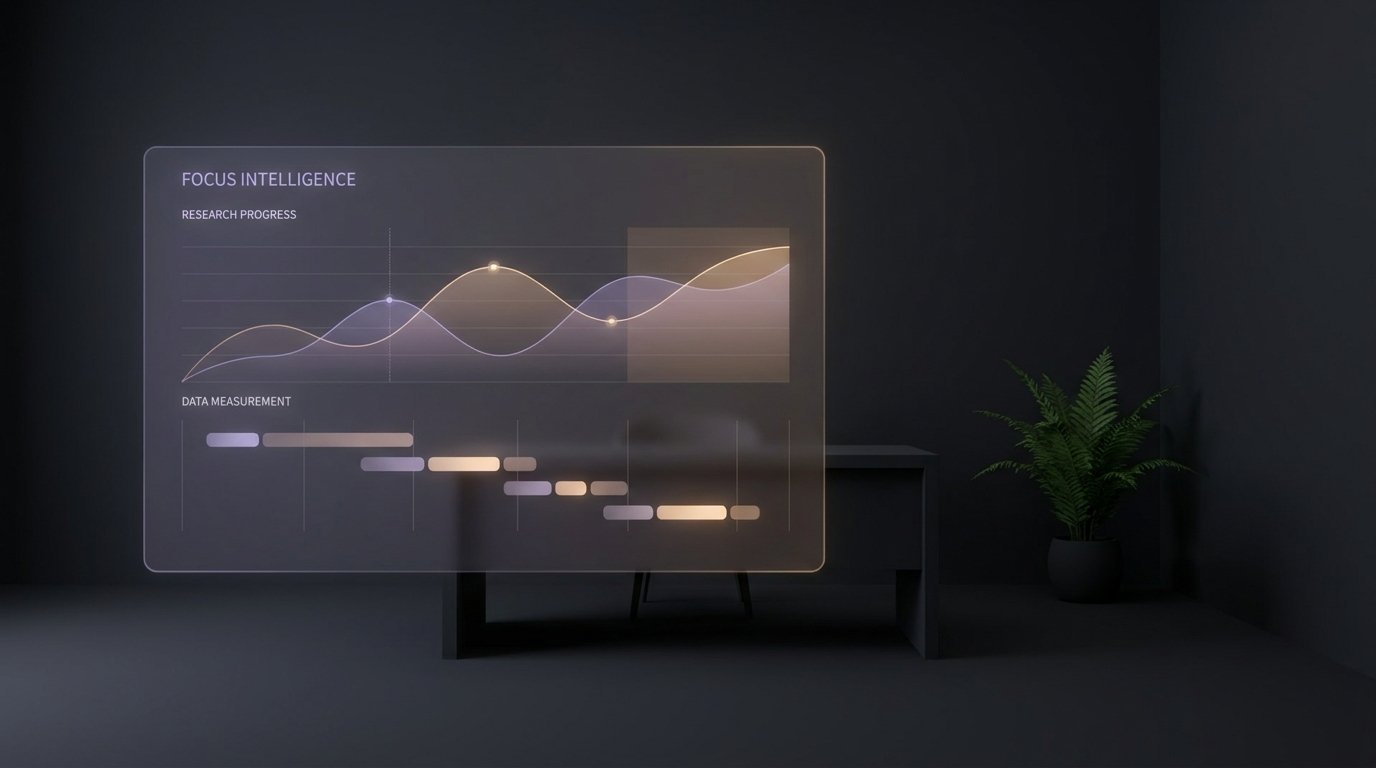
I want to be careful here. We are not a research lab. We're a small company building a product. But because we built Ikuna on top of this research, and because the product generates data on how people actually focus, we're in a position to test some of the claims we made when we started.
Here's what we're specifically measuring, with user consent, on-device, aggregated:
Do Rituals & Triggers demonstrably shorten context-switch reload time? Godden and Baddeley tell us that matching environments improve recall. We're testing whether users who set per-context wallpaper, music, and opening videos reach their first meaningful action in a new context faster than users who don't. We don't know yet. We're finding out.
Does Focus Shield reduce measurable interruption frequency? Leroy's work says that making a switch decision conscious instead of automatic should reduce residue. We're measuring whether contexts with Focus Shield enabled show fewer short-duration visits (under five minutes, likely interruptions) than contexts without it. Early data suggests yes, but the sample is still small.
Do contexts named after event boundaries retain their state better than time-of-day contexts? Zacks's event segmentation theory says the brain chunks experience at natural boundaries. We're comparing user behaviour for contexts named after projects or events ("Client Work," "Deep Writing") versus contexts named after time slots ("Morning," "Afternoon"). The hypothesis is that event-based contexts will show longer average durations and fewer switches per session. We're still collecting.
This isn't academic research. It's product research. We're not trying to publish. We're trying to find out whether the mechanisms we built actually do what the papers said they should, in the real environment where people work. If they don't, we'll change them. If they do, we'll double down.
The reason I'm telling you this is that it's the honest version of where we are. We built Ikuna on named research. Now we're using Ikuna to test whether we built the right things.
Why the science matters for a product decision
A user doesn't need to know any of this science to use Ikuna. You can download it, set up a few contexts, and get the benefit without ever reading a paper. That's by design.
But the reason Ikuna's design choices are what they are — and not something else — is that they were made against this research. The reason contexts are the core primitive instead of window layouts is Jeffrey Zacks. The reason Focus Shield escalates instead of just blocking is Sophie Leroy. The reason Rituals & Triggers exist at all is Godden and Baddeley. The reason we built a dashboard instead of just a switcher is Gloria Mark. The reason we care about offloading cognitive load is Roy Baumeister. The reason we think physical boundaries matter is Gabriel Radvansky.
Every feature we've shipped, and every feature we'll ship, gets tested against these papers before it goes out. Not because we're trying to be academic. Because the research tells you what actually works, and what just feels like it should work.
That's the promise the Science section on ikuna.app holds. It's not decoration. It's the foundation. When you use Ikuna and something feels like it's doing more than it should, like the ritual entry is working faster than it has any right to, or the dashboard is showing you something about your own attention you've never seen before, the reason is usually in one of these six papers.
We read them so you don't have to. But if you want to, they're all cited below.
FAQ
Do I need to understand cognitive science to use Ikuna? No. Ikuna is built so the mechanisms work whether you know the research or not. The rituals trigger, the contexts restore, the dashboard shows you your attention data, and none of it requires you to have read a paper. This article exists for people who want to know why the product works the way it does, or who are deciding whether to trust it. The science is the foundation, not the interface.
Is Ikuna a research tool? No. Ikuna is a productivity tool that happens to generate research-grade data as a side effect of doing its job. We're using that data, with user consent, to test whether the mechanisms we built actually work. But the product's job is to help you focus, not to run experiments. If you're a researcher interested in the data, reach out. If you're a user, the research layer is invisible unless you want to see it.
Aren't some of these findings, like ego depletion, contested? Yes. Roy Baumeister's early ego-depletion effect sizes have been challenged in replication studies, and the debate is ongoing. I've tried to be honest about that in the section above. The specific mechanism is less settled than it was in 2000. The broader direction — that cognitive control is a limited resource and you should conserve it for things that matter — is robust. The reason we cite Baumeister isn't because every detail of the early studies held up. It's because the principle, that external cues should do the work so willpower doesn't have to, is sound and useful for product design.
Where can I read the papers themselves?
Gloria Mark — "The cost of interrupted work: More speed and stress" (2008), CHI Proceedings
Jeffrey Zacks — "Event Perception" (2007), and the book Flicker: Your Brain on Movies (2014)
Gabriel Radvansky — "Walking through doorways causes forgetting" (2011), Quarterly Journal of Experimental Psychology
Sophie Leroy — "Why is it so hard to do my work?" (2009), Organizational Behavior and Human Decision Processes
Godden & Baddeley — "Context-dependent memory in two natural environments: On land and underwater" (1975), British Journal of Psychology
Roy Baumeister — "Ego depletion: Is the active self a limited resource?" (1998), and the book Willpower (2011)
Most are available through university libraries or ResearchGate. If you're deciding whether to trust a product that claims to be built on research, reading the actual papers is the right move.
Ikuna is the focus intelligence and context manager for macOS. It rebuilds full project contexts in under three seconds, fires per-context rituals on entry, and shows you the shape of your own attention through Focus Intelligence. Free plan at brnsft.com/ikuna. Pro at ikuna.app.
